stress
/stres/
noun
-
pressure or tension exerted on a material object.
-
a state of mental or emotional strain or tension resulting from adverse or very demanding circumstances.
tress stress
/tres stres/
noun
- Stress caused by one’s hair.
Tress stress is a condition that can be suffered by anyone whose hair does not meet the societal ideal, whether in texture, thickness, abundance, length or colour. The cause of this condition is two-fold: it is brought on by external factors putting pressure on you to wear your hair a certain way; and it also comes from within, from the internal pressure you put on yourself to try to meet those external demands.
For people with textured hair, tress stress can be chronic. This chronic stress is caused by constantly seeking to achieve a straight-haired or even wavy-haired norm for the sake of “beauty”, in conjunction with trying to loosen your curl patterns for the sake of “manageability”. In this series of posts, I’m going to discuss different forms of tress stress and how they can be alleviated.
Have You Ever Tried to Straighten a Slinky?
This past Sunday was Easter, which is the one day of the year when churchgoers wear their “Sunday’s Best”, if at no other time. When my sister and I were younger, Easter Sunday’s Best meant that we would be getting our hair pressed (essentially, ironed with a hot comb) the night before. This was an occasion that was always met with great anticipation because for the rest of the year, it was only braids and Afro puffs for us (how boring! we thought). Having our hair pressed meant that it would blow in the wind, it would look longer, and we would pretty much feel prettier; BUT it also meant that we couldn’t do anything– we’d have to make sure that our blankets weren’t too hot, that our shower wasn’t too steamy, and that we didn’t run around too hard at church—otherwise, that “pretty” press-and-curl would sweat right out—and our hair would turn back (curl up)!
The wonderful thing about straightened kinky (tightly curled) or curly hair is that when it’s exposed to moisture, it coils right back! This phenomenon of turning back is the reason why many Black girls avoid jumping into the pool, even when it’s boiling hot outside—it’s not because they don’t like to swim—it’s because they know that once that water hits their hair, it will ruin their hairdos which probably took them a long time to get done (and will probably take even longer to re-do). Another reason for the hesitancy is usually because detangling extremely curly hair can be very time-consuming, especially if you don’t have the proper tools on hand or know the right techniques.
The uniqueness of “African” hair
Due to the unique texture and properties of “African” hair, Black hair care methods are generally different from that of most other ethnic groups. Though there is no such thing as “African” hair (since the continent of Africa is populated by many diverse ethnic groups from different climates, each having its own hair texture), what we tend to call “African” hair is the type that is found in Sub-Saharan Africa, which is kinky and frizzy. Ethnic groups have various traits, like skin colour and hair texture, partly because of the climates of the environments where their ancestors lived. People with Sub-Saharan African ancestry tend to have coily hair, which provides insulation from the sun to keep one’s head cool, but it is also prone to getting tangled, and tends to be drier and duller than other types of hair.
A source of frustration
Though my sister and I only experienced our specially pressed hair but once a year, for many other Black girls, straightened hair was the norm (and for many, it still is). Our friends’ mothers would relax (chemically-straighten), press or flat-iron their hair on a regular basis, in order to make it straight, sleeker, and more manageable. These processes were supposed to make life easier.
But as my brother observed, “Black women straightening their hair is like trying to straighten a slinky.” Have you ever tried to straighten a slinky? No matter how hard you tried, you wouldn’t be able to get all the kinks out, and it would either revert to its original state or just end up completely destroyed. The same idea applies to trying to smooth down frizzy hair. It’s like playing a game of Whac-a-Mole– those curls will just keep popping up! So what does all of this mean for the kinky- and curly-haired people of the world? It means frustration!
frus·tra·tion
frəˈstrāSH(ə)n/
noun
the feeling of being upset or annoyed, especially because of inability to change or achieve something.
- an event or circumstance that causes one to have a feeling of frustration.
- the prevention of the progress, success, or fulfillment of something.
I think a lot of the frustration we experience comes from us trying to make our hair do what it’s not supposed to do. In the name of “beauty”, we spend so much of our time trying to make our hair do things that are contrary to its very nature: we try to make our hair look sleek, straight, or wavy, when it all it wants to be is curly, puffy, and fuzzy. In the name of “manageability”, we alter our curls, whether through heat or by chemical means to make it “easier” to comb and style. But all of these efforts only serve to frustrate us. In the same vein, it’s no coincidence that the origin of the word “frustration” is the Latin word frustrare which means “to disappoint”. As long as we continue to try to achieve straight styles and to manipulate our hair using the same methods intended for straight hair, we will only be disappointed.
So what’s the cure for this kind of tress stress?
cure
kyo͝or/
noun
1.
a substance or treatment that cures a disease or condition.
- restoration to health.
- a solution to a problem.
To relieve this condition, rather than frustrating ourselves with trying to make our hair do what it doesn’t want to do, I think we should try to “lean in” to our curls, by:
- Accepting and making the most of our texture or length, no matter how kinky or short our hair may be.
- Changing our definition of what looking “good” means for our tresses. We need to stop trying to compare apples to oranges—it will never work.
- Gaining an understanding of the properties of our hair and adopting new methods and techniques for maintaining it. For instance, on a basic level, curly hair cannot (and in some cases should not) be combed in the same way as straight hair—the curlier your hair, the wider your comb teeth should be. And sometimes it’s even better to use your fingers instead!
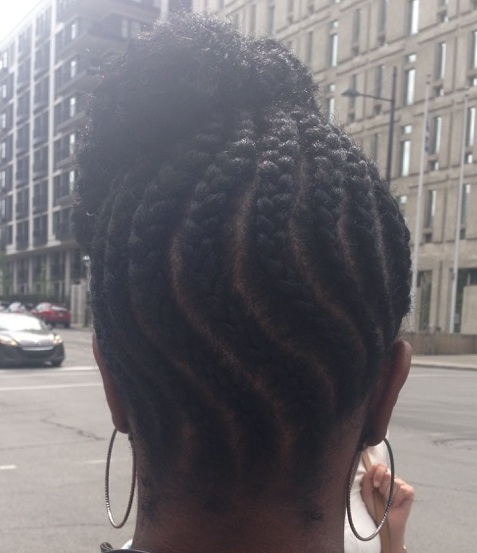
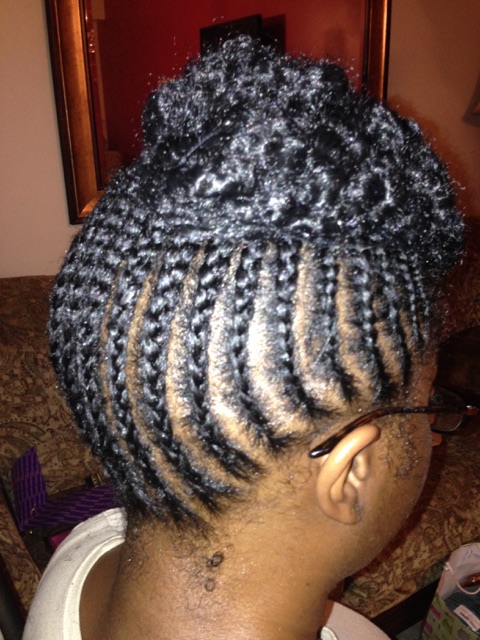
- Figuring out what your hair does well, and doing that! Find out what styles work for your hair, and then wear them like nobody else! For some people, that might mean keeping their hair short. For others, it might mean having their hair braided. Whatever you choose, do you!
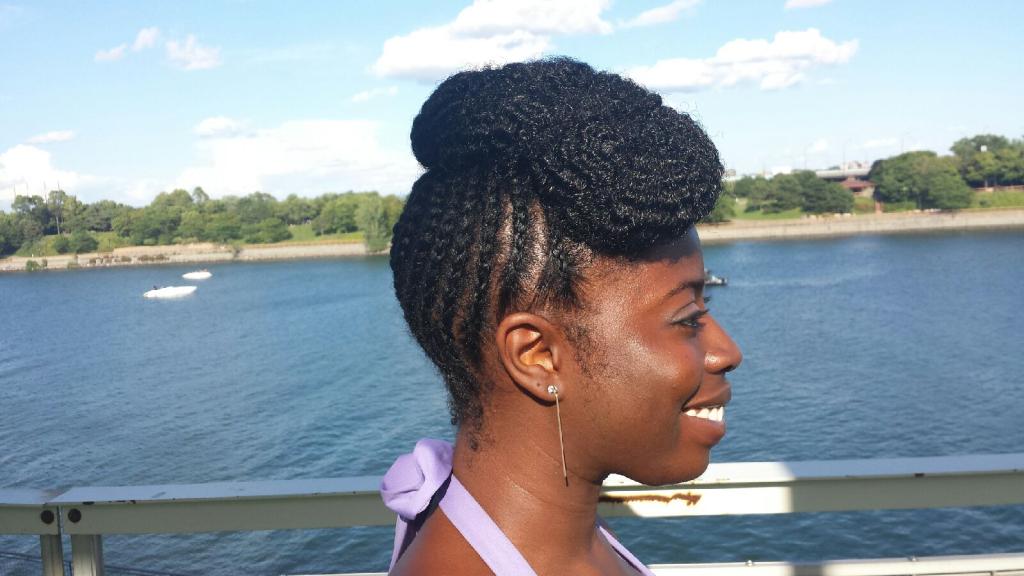
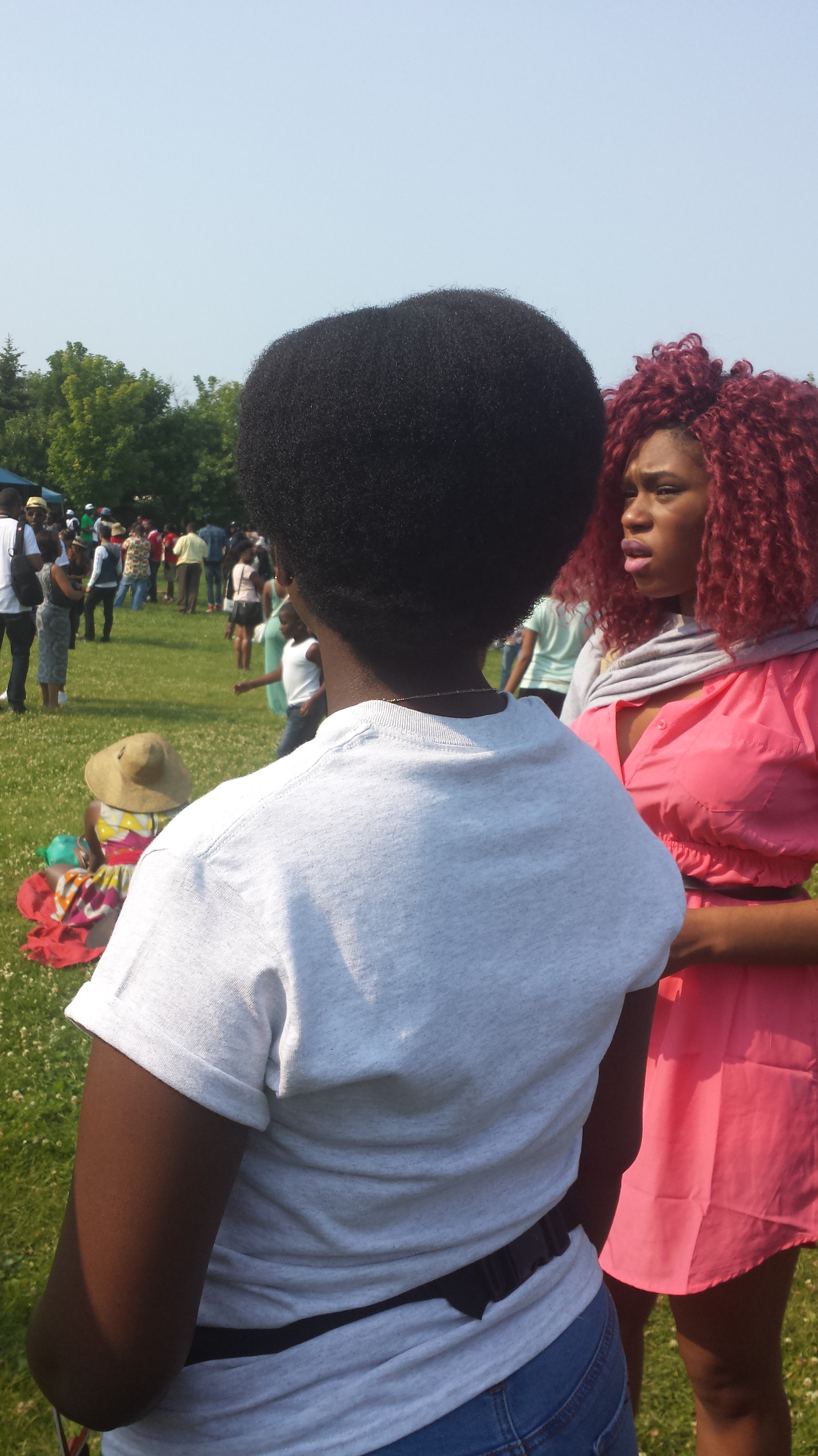
- Keeping in mind that Black hair itself is unique by nature, so it cannot do the same things that straight hair can do; but what that also means is that it can do things that straight hair cannot do! For example, it can stand on end! It can also be formed into designs that keep their shape. We need to start harnessing and celebrating these qualities of textured hair!
- Remembering that your hair is unique to you, and it will never look like exactly like anyone else’s. So, instead of trying to get what someone else has, learn to appreciate your own.
The more we begin to embrace our hair for what it is, and start letting go of our unrealistic expectations, I believe the less stress we’ll feel.
Do you suffer from tress stress? How do you try to alleviate it?

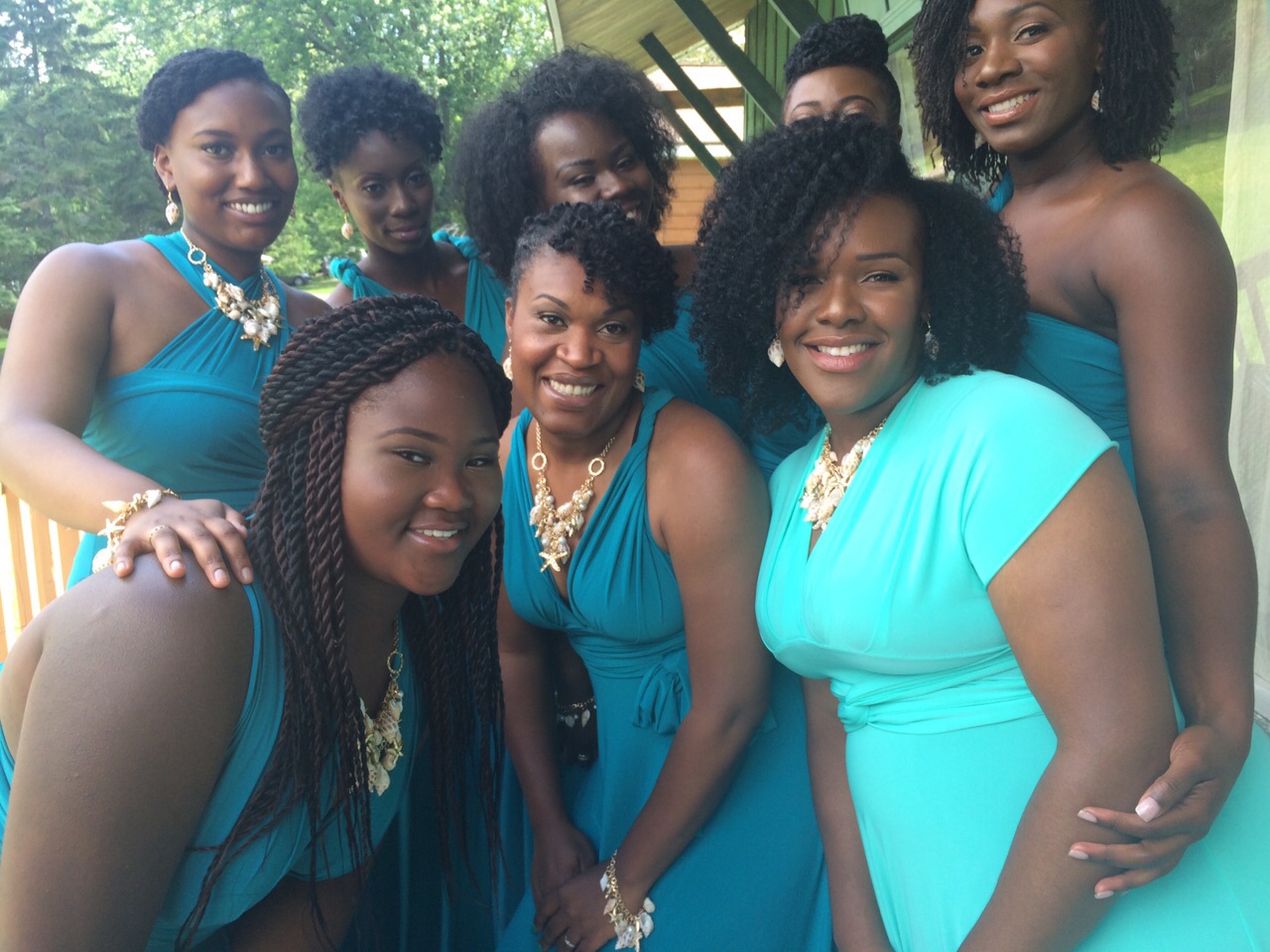
 Labour Day has come and gone, which means that my favourite season of the year is now pretty much over…sigh! It’s been quite the summer though: my hubby and I have attended six weddings so far (and we still have one more on deck for October!)











 The Natural Hair Advocate