How to Bantu-knot your hair

Bantu knots, also known as Zulu or Nubian knots, chiney bumps, pepper seeds, or hair nubbins, is a traditional African hairstyle, made by sectioning your hair into triangles, diamonds, or squares and coiling those sections into knots.

What you will need:

  • Sulfate-free shampoo and conditioner
  • 
Towel
  • Spray bottle
  • 
Wide-toothed comb/Detangling brush
  • 
Tail comb
  • Butterfly clips/Snag-free ponytail holders
  • Water-based moisturizer
  • Twisting gel/cream
  • Bobby pins (optional)

Steps:

  1. For best results, start with damp hair that has been recently shampooed and conditioned and towel-dried.
  2. Spritz hair with water using a spray bottle.
  3. Use your fingers or a tail comb to divide hair into about 6 to 9 sections, depending on the thickness of the hair.
  4. Separate the sections using butterfly clips or snag-free ponytail holders.
  5. Starting at the back of the head, loosen one section of hair (one on either edge of the nape is usually best).  If the section feels dry, spritz it with some water.
  6. Apply your favourite water-based moisturizer to the section, paying extra attention to the ends of the hair.
  7. Use your fingers/wide-toothed comb/detangling brush to detangle the section of hair.
  8. Apply your favourite twisting cream or gel to the section to the moisturized, detangled section.
  9. Separate with your fingers or part a piece of the section with your tail comb into your desired shape (starting from the edge of the nape makes it easier), keeping in mind that the bigger the piece the bigger the size of your Bantu knot, and clip the rest of the section to the side.
  10. Bend the strand close to its base and pinch the bump created between the thumb and pointer of your left hand, and use your right hand to wind the length of the strand around the bump at the base to form a coil.
  11. Keep winding the length of the strand around the coil with your right hand, gradually winding closer and closer to your head with each round, until all of the strand has been completely wound up, to form a Bantu knot.
  12. If your hair is curly, and your knot is coiled tightly enough, the ends will likely stay coiled under the knot; if your hair is looser, then you may need to use a bobby pin to hold the knot in place.
  13. Unclip the remainder of the section, and repeat Steps 9-12 until the section is completely knotted.
  14. Move on to the next section of hair, and repeat Steps 5-12 until all of the sections are knotted.

***You can also create Bantu knots from two-strand twists: once your two-strand twists are completed, follow steps 10-14 above.***

To keep your Bantu knots neat, wear a satin bonnet or tie your head with a satin/silk headscarf when you go to sleep.

Available Now: What Are You Gonna Do with that Hair?

Everyone knows Zuri as “the girl with the puffy hair.” Her afro is big and fluffy, and not even gravity can keep it down. People often ask her, “What are you gonna do with that hair?” Zuri finds the answer in her cultural hair-itage and shows she can sculpt and shape her curls and coils into beautiful works of African art—braids, ‘locks, bantu knots—in other words, whatever she wants!

This illustrated non-fiction book encourages Black girls to celebrate the beauty and versatility of their natural hair and learn the rich history of natural hairstyles.


Get your copy today!

Available in Canada on Amazon.ca: Click here to purchase.

Also available in-store at Knowledge Bookstore: 177 Queen Street West, Brampton, Ontario L6Y 1M5.

Available in the United States on Amazon.com: Click here to purchase.

Every day is a good hair day!


Sleeping Beauty

If you’ve ever gone on an overnight trip with a Black girl (or if you’re in a relationship with one), then you know that she’s not hitting the sack until she’s tied her hair up with her beloved hair tie.  As I mentioned in a previous postthe head tie is a Black girl’s most prized possession– for a number of different reasons- one of which is to keep her hairstyle intact while she’s sleeping.  But in case you didn’t know already, wearing a head tie also protects Black hair from breakage caused by tossing and turning on cotton pillowcases.

red_and_blue_bandannasI grew up tying my hair down with a cotton bandanna and/or a nylon stocking cap, which I now know are big natural hair no-nos! Cotton absorbs the moisture and oils from natural hair, leaving it dry, and subject to breakage; while nylon stocking caps can snag your hair if they are too tight, and can also damage your edges. In any case, by the time I got to undergrad, I had graduated to sleeping with a (much more sophisticated) satin-y bonnet (I say “satin-y” because it was actually one of those polyester ones from the Black beauty store). And ever since then, it’s been all about the bonnet (thanks, Spelman sisters!); I only really opt for the head tie when I’m trying to keep my frizzies down for a sleeker look.

Note: I know many ladies complain about their bonnets falling off at night; so, try to find one that is snug enough to stay on, but not so tight as to damage your hair.

20160914_160131 However, before I got married, I often wondered what my husband was going to think about my beloved bonnet.  After all, a bonnet that makes you look like Mother Goose is not exactly the sexiest thing in the world…but, then again, neither is having damaged hair!  Thankfully, my husband never let the bonnet bother him, lol; but for those times when I’m feeling extra romantic, I have discovered a better alternative: a satin or silk pillowcase (that way, I can protect my tresses and preserve my sexy at the same time!)

For the longest time, I had been using (again) a cheap polyester one from the Black hair store…


20160206_110000

Those lint balls alone show how gentle this cheap stuff can be on your hair…

20160206_105935


…but I decided to invest in a real silk one (from London Ivy Products), and I don’t think I could ever go back- it feels so good!

20160206_105037 20160206_105308 20160206_105540

Also, apparently, sleeping on silk is not only good for your hair, it’s good for your skin, tooso, double-win!   

I believe every queen should protect her crown! Black hair is fragile and therefore requires tender loving care; so, remember to be gentle with your hair, even when you’re in bed, Sleeping Beauty! Avoid cotton and nylon, and treat yourself to some silk or satin- trust me, your hair (and skin) will thank you!

If you’re looking for real satin bonnets, check out: Earthtones Naturals – Satin Bonnets

Or if you prefer silk pillowcases, check out: London Ivy Products – Silk Pillowcases

How do you preserve your beauty while you sleep?


Coming soon…

Meet Zuri
Zuri loves her natural hair and all of the amazing things she can do with it!

Zuri -Coming Soon

Follow her throughout history and around the world as she learns about the beauty and versatility of natural hairstyles in What Are You Gonna Do with that Hair? 

Coming soon…

Tress Stress – Pt. III (or “When you want what you don’t have”)

en·vy
/ˈenvē/
 noun
1. the feeling of wanting to have what someone else has.
2. someone or something that causes envy.


verb
1. to feel a desire to have what someone else has : to feel envy because of (someone or something).

hair envy
noun
1. the feeling of wanting to have hair like someone else.


We always want what we don’t have

Lavinia Lahrese

My fellow lawyer (and YouTube vlogger) Lavinia Lahrese and her beautiful fine natural hair! Check out her channel: www.youtube.com/lavinialahrese

Last week, I was having a conversation with a colleague of mine about Black hair, and she started sharing her experiences with tress stress with me, as a fellow naturalista:

My hair’s so thin! I wish it were thicker, like yours!

I wish my hair was longer! 

When I do my wash-and-go, it doesn’t look like yours!

I think my workmate has beautiful hair- a mane to be envied, even (pictured to the right)! In fact, her hair reminds me of my sister’s: it’s very fine; more curly than it is coily; and it has quite a bit of length too!  Ironically, while both of these ladies have expressed their frustrations to me about their fine natural hair, when I was younger, I remember having my own issues with hair envy- wishing that my hair was more like theirs because nobody ever really wanted to comb mine!


Why? Because I had (and still do have) a lot of hair.  They used to call me “Bush-Head”, actually, because it was so big.  And not only did (do) I have a lot of hair, in terms of density, but it’s also thick! My sister’s hair, on the other hand, was easier to manage- even when it got wet- and therefore was not a hassle.


Wash Day

Wash Day when I, “Bush-Head”, was a toddler (not much has changed since then!)

My sister, Sarah, in SK

My sister, Sarah, in SK


Sadly, hair envy is not uncommon. Whether due to external and/or internal influences, we always seem to want what we don’t have: people with curly hair wish they had straight hair; those with straight hair wish it was curly; people with thin hair wish it was thick; and those with thick hair wish it was thinner!

Over the years,  however, I’ve learned that it really doesn’t pay to envy what other people have– whether that’s hair or anything else, for that matter- because:

(a) It doesn’t change what you have, and

(b) It distracts you from recognizing and valuing what you do have!

All envying really does is cause you unnecessary grief!

The answer to hair envy is hair contentment: you have to get to the place where you are content with what you’ve been given!


So, when my workmate asked me, “how are you so comfortable now with your natural hair?”, I told her exactly that: “you just have to accept what you have, and then make the most of it!”

Big hair don't care

Accepting what’s mine, and making the most of it!

Overcoming hair envy with hair contentment

Having grown up natural, and dealing with my own experience with hair envy as a child, I get it: it’s hard sometimes to be content with what you have, when everything and everyone seems to be saying to you that your hair isn’t good enough!  

But if you want to reduce the type of stress caused by hair envy, and thus be happy with your own tresses, two things need to happen.  You need to recognize and accept that:
(a) Our hair, African hair, is uniquely ours; and
(b) Your hair, as an individual, is uniquely yours.


Uniquely Ours

African/textured hair is uniquely ours: no one has hair like we do!  So instead of focusing on what it supposedly can’t do, focus on what it CAN do– it’s all about perspective!


  • Our hair, in its purely natural state, supposedly CAN’T “move” or blow in the wind, BUT our hair CAN stay in place when you style it. (PS- in case you didn’t know, our hair CAN “move”, both when it’s curly or straightened, depending on how you manipulate it.)
  • Our hair supposedly CAN’T lie flat and it’s too frizzy, BUT our hair CAN be shaped and defined, often without the help of any implements. (PS- our hair CAN lie flat and smooth when it’s stretched or straightened, both with/without the help of gel or styling cream.)
  • Our hair supposedly CAN’T get to waist length at the drop of a dime, BUT our hair CAN go from short to long instantaneously- hello, shrinkage! (PS- our hair CAN get to waist length too, with the right amount of care.)
  • Our hair supposedly CAN’T be “managed” because it’s too tangly, BUT our hair CAN keep braids, rolls, and buns, etc without much assistance, for that very same reason! (PS- our hair CAN be “managed” using the right combs and detangling brushes, some water in a spray bottle, and/or a good moisturizer/conditioner to add some slip!)
Uniquely Yours
It’s also important to remember that your hair, as an individual, is uniquely yours! No one has hair exactly like YOU do! As I mentioned earlier, even my sister and I don’t have the same type of hair; and though your mane may be similar to someone else’s (like Sarah’s is to Lavinia’s), nobody’s is exactly like yours! That should make you excited because what it means is that there is at least one specific thing that your tresses can do that no one else’s can; and once you discover what that thing is, you should embrace it and celebrate it!
Sarah & Me

Sarah and me, celebrating our uniqueness (PS- nobody can wear a ‘fro like me!)

Do you struggle with hair envy? If not, how have you learned to be content with your tresses?

Wrap it Up: A Tribute to the Head Tie

20150815_193018Today, I want to talk about every Black girl’s most treasured possession (next to her wide-toothed comb, of course, lol): her head tie.

In case you’re unfamiliar with the term, a “head tie” or “head wrap” is a piece of cloth or a scarf that is used to cover or wrap your hair, also known as a bandannakerchief, head scarf, gele, dhuku, duku, doek, or tukwi, depending on who’s wearing it and/or its function.  Please keep in mind, different head ties are worn for different purposes; and not all head ties are created equal.

IMG-20160529-WA0000 copy

Sarah-Naomi of Sarah Naomi’s Hair Care & Beauty

Lately, head wraps have been becoming increasingly popular, during our present-day “African Renaissance”, as I like to call it, and falling in step with the Natural Hair Movement.  Everywhere I look, I see Black women wearing bright beautifully patterned African head coverings.  But the head tie is nothing new to Black culture…

A little bit of history…

Portrait_of_a_Haitian_woman

Portrait of a Haitian Woman by François Beaucourt, 1786 (Public Domain)

The head-tie or bandanna was a piece of cloth that female slaves wore to shield their heads from the heat of the sun, absorb sweat, keep their hair clean and their braided styles intact, and to “train” the growth of their hair.

Though head-ties are now considered a traditional African clothing item, when the Europeans explorers first arrived in Africa, people actually wore their hair uncovered. One historian believes that the practice of wearing head-ties may have come from the expectation of women to cover their heads for mass in the New World and in the West African colonial settlements.

For Black slave women, head coverings were used to hide their hair when it was messy because untidy hair was considered disgraceful for women, according to West African traditions. Given the importance of hair in traditional African cultures, not being able to take care of and braid their hair like they used to in Africa was particularly humiliating for slave women, so they used their head ties to cover their shame.

Head ties thus helped female slaves feel a bit better about their appearance, and by the mid-1800s, almost all slave women wore them. Since then, the practice of wearing head ties has been passed down through the generations, and Black women still use them today to cover their hair for various reasons.


My head tie, how do I love thee? Let me count the ways…

When I want to keep my hair clean, I wrap it up!

Untitled 2 copy 2

2016 Color Me Rad 5K, Toronto

As for me, I started thinking a lot about my head tie particularly this past weekend as I was getting ready to do the Color Me Rad 5K.  The night before the 5K, while most people were probably worrying about whether or not they should bring their own water bottle, or if they should run with a backpack, I was at Walmart trying to figure out what I was going to buy to tie my head.  

Why? Because I just wasn’t ready to have to contend with trying to get that coloured powder out of my hair afterwards.  After all, I had no idea what they put in that stuff, and I didn’t want it all up in my ‘fro (mind you, it wasn’t til afterwards that I thought, hey, whatever’s in the powder is now on my skin and in my lungs, for that matter; but that’s another story, lol).  So, I wandered up and down the aisles trying to find a white bandanna, or a cheap pashmina, and even considered just using one my husband’s white t-shirts.  I just needed something to cover my head!

Screenshot_2016-05-31-13-22-49-1 copy Screenshot_2016-05-31-13-34-45-1 copy

I ended up settling on this baseball cap (pictured above), which did its job well enough; but I do know nothing would’ve given me the same coverage as just the right head tie!  The sort of head tie I’m talking about is the one whose only purpose is to keep my hair from getting dirty or in the way.


When I’m feeling like a queen, I wrap it up!

As  I mentioned earlier, with this “African Renaissance” that has been taking place, there’s been a renewed interest and celebration of all things African.  Alongside the Natural Hair and Black Lives Matter Movements, people of the African Diaspora have been retracing and re-appropriating many aspects of our cultural roots, with pride; and, as a result, the head wrap, as a fashion accessory, is really starting to make a comeback, for members of the diasporic community.

Interestingly enough, earlier this year, in Durham, North Carolina, a group of girls at The School for Creative Studies were asked by a school administrator to remove the African geles they were wearing for Black History Month because their school district does not permit students to wear head gear except for religious or medical reasons.  I don’t know about the ins and outs of the school’s dress code policy, but I do know that wearing a head wrap is often more than a mere fashion statement: it’s a tribute to our African ancestry.

For me, these sort of fancy head wraps always remind me of my Auntie, who’s been wearing them ever since I could remember; she’s always embraced Afrocentric fashion.  And when we were younger, she used to dress my sister, cousins and me in West African attire, complete with our head wraps; thanks to her, we grew up being the beautiful African princesses she knew we were.

Office Lens 20160415-122822 copy Office Lens 20160415-110829 copy


And now, as an adult, I know that whenever I wear a head wrap, I feel like a queen: it’s like wearing my own African crown.

Getting my Senegalese headtie Getting Senegalese headtie (3) Senegalese headtie


When I want my hair to “stay good”, I wrap it up!

20150906_133516 copyWhenever I’ve had my hair done, I know there’s no way to keep my hairstyle intact and long-lasting like tying it down with a nice silky head tie- in this case, a head scarf- especially since my hair is natural.  This sort of head tie is typically worn at nighttime to keep the hairstyle from being disturbed by tossing and turning.  This sort of head tie is also worn to protect the hair itself from pillowcases, which can dry out and break textured hair.  And sometimes if an occasion is extra special, this sort of head tie might be worn in public, but only to make sure that all flyaways and frizzies are held down until the last possible moment, so the style looks perfect upon its unveiling!

This particular function of the head tie is one that is not readily understood, and understandably so.  I remember when I was getting ready for my bff’s wedding, my fellow bridesmaids (who were of Korean descent) asked me if I was planning on wearing my head tie (pictured above) for the actual wedding.  I had to explain to them that, even though this scarf matched the colour of our dresses, I was only wearing the head tie to keep my braided style neat.  And, sometimes, that’s all that the head tie is there for!


20160529_202503

Wrap Queens: Me and Monique London of London Ivy Products

When I don’t know what to do, I wrap it up! 

Last, but not least, my head tie saves my life when I have no idea (or time) to do anything with my hair!

As a naturalista, there are times when I just don’t have the time (nor the desire) to do a twist-out, get my hair braided, or pick it out into a ‘fro; so, on the head tie goes! This sort of head tie can come in handy, for instance, on wash day, when you’ve combed out your hair, but haven’t had time to style it (as was the case for me in the picture above, a couple of days ago, when I ran into Monique London of London Ivy Products, who was also sporting her pretty head wrap!); or any other day, for that matter, when you may be having a bad hair day, or are just not in the mood!

So, those are the reasons why I love my head tie! If I’ve inspired you to wear one yourself, check out this link to learn how to tie one: http://www.huffingtonpost.com/2015/07/02/how-to-headwrap-ways-to-tie_n_7705824.html

And if you’re looking to purchase your own African print wraps, check out London Ivy Products: http://londonivyproducts.com/collections/headwraps 


Sources:

Byrd, Ayana D. and Lori L. Tharps. Hair Story: Untangling the Roots of Black Hair in America. New York: St. Martin’s Griffin, 2001, pp. 4, 13.

Rooks, Noliwe M. Hair Raising: Beauty, Culture, and African-American Women. New Jersey: Rutgers University Press, 1996, p. 25.

White, Shane and Graham White, Stylin’: African American Expressive Culture from Its Beginnings to the Zoot Suit. Ithaca: Cornell University Press, 1998, pp. 58, 59, 60.

Wikipedia, “Head Tie”, 2016.

Do you love your head tie as much as I do? How and when do you wear yours?


Black History Month is every month!

image

Yesterday was the last day of Black History Month 2016. As we go through the rest of the year, let us continue to reflect on the history lessons we’ve learned (or re-learned) during this month of cultural celebration.

Let us go forward with a positive mindset and a determination to succeed, like our ancestors did before us!

Let us continue to think critically; question the status quo; and work towards undoing the fallacies that keep us mentally enslaved, so that our future generations can truly be free!

Black History Month is every month! Black history is everyone’s history!

Let’s celebrate Black History all year!

Parents, Support the PUFF!

AfroIn case you haven’t heard about it already, this week, a group of Black female students have been reprimanded for wearing their hair naturally, only this time in the Bahamas (sparking online outrage via the #supportthepuff or #isupportthepuff hashtags). Of course, this type of sanctioning is nothing new; there have been a number of other cases where natural-haired Black children have faced punishment at school for either wearing their hair out, in braids, or in locks. It seems like, for many, Black hair is not considered “school-appropriate” (or work-appropriate) unless it’s flat-ironed or permed, which I think is ridiculous.  But what I find most offensive about these incidents is that, in many cases, the disdain for natural hair is coming from fellow Black people! Alas, the oppressed have now become the oppressor!

So, why is this happening?  It is important to keep in mind that this notion of natural Black hair being “unruly”, “untidy” or “unkempt” by default is one that dates back to slavery, and has been ingrained in our psyche ever since. Negative rhetoric about African hair was used against slaves to rob them of their dignity and humanity, especially since hair design and care were integral cultural practices within African societies. Since slavery days, hair politics of this sort (in conjunction with colourism) have played an important role in constructing “otherness” as it pertains to Black people in society; and it has been perpetuated both within the Black community as well as through the media and social institutions.  This is why in 2016, girls are being threatened with suspension from school for wearing their natural hair, in spite of the Natural Hair Movement.  It is clear that Black hair is still considered an affront to mainstream culture.

Therefore, in a world that continues to make it hard for people of colour to feel comfortable in our own skin, I am urging parents and guardians of Black children to please

Support The PUFF:

Pride – We need to encourage our children to feel a sense of pride about their natural hair. After all, this is how their hair grows out of their heads. So why shouldn’t they be proud of it? Our hair texture and our hairstyles connect us to our rich African ancestry. Before slavery (and colonialism), African peoples took great pride in their hair. Back then, If you had a massive halo of Afro hair, it was a sign of good health and beauty! Moreover, African hairstyling was more than just hair maintenance: each hairstyle had significance and carried important messages about its wearer. Hairstyling was a revered occupation; and African hairstyles were (and still are) art.

Uniqueness – We should teach our children to celebrate the uniqueness of their natural hair. We all recognize that Black hair is different from everyone else’s, but that does’t mean that it’s deficient. Our hair can do things that other types of hair cannot: when it’s styled, it keeps its form and it can be sculpted into various shapes and designs. Not to mention the phenomenon of shrinkage—imagine, you can have long hair and short hair at the same time! It’s time for us to celebrate the unique properties of our hair, and to teach the next generation to do the same.

Freedom – We need to help our children embrace the freedom that comes from not feeling the need to conform to a straight- or long-haired aesthetic. Part of the reason why we often experience so much frustration with our hair is because we try to make it do things that it’s not supposed to do! [For more on this topic, check out Tress Stress – Pt. I: Have you ever tried to straighten a slinky?] When our hair is straightened, we try to avoid water like the plague—whether from sweating, showering, or the rain! And then when we decide to go natural, we try to get our hair to look like someone else’s—whether it’s trying to attain their definition, length, or curl pattern! If we would just accept our hair the way it is, and play to its strengths, we would be free to just be!

Fellowship – We should engage in the fellowship of the ever-growing community of naturalistas and natural hair lovers and allies. Thanks to the internet and social media, there is now a wealth of information, advice, and support to help our children wear their hair natural with ease—all available at our fingertips. There is no longer a need a to feel frustrated or overwhelmed by our hair care woes. We can find strength in each other!

So, together, let’s support the pride, uniqueness, freedom and fellowship that can come from wearing our hair naturally! Our children need to grow up knowing that they are beautifulexactly the way they are! And if we don’t tell them, nobody else will.


Sources:

Hair Story: Untangling the Roots of Black Hair in America by Ayana D. Byrd & Lori L. Tharps.

What will you do to #supportthepuff?


The Natural Hair Movement is here to stay: Afrofest 2015

20150704_174203

For the past 27 years, Afrofest has been bringing the rhythms, flavours, creativity, and vibrancy of the African continent to the heart of Toronto, in a free festival that attracts thousands of people annually.

This Saturday, I headed down to the festival at Woodbine Park, with my hubby and my brother, to not only celebrate Mama Africa but to also ask some of her daughters the following question:

Is the Natural Hair Movement just a trend, or is it here to stay?

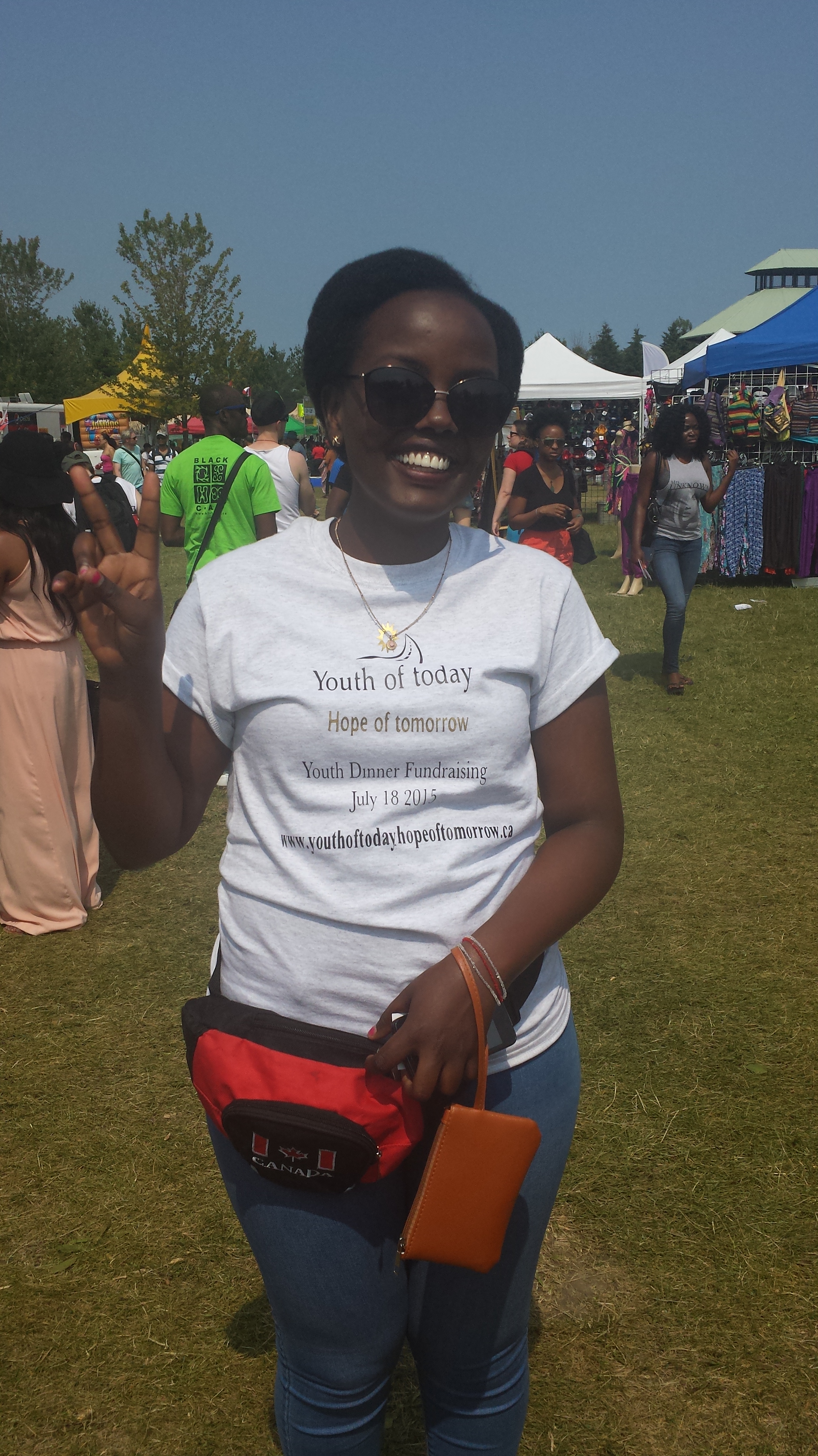
First, I met Marilyn.  “It’s about time!” was her response, when asked for her thoughts on the traction of the Natural Hair Movement.  Marilyn started out her natural hair journey “spit-shine bald” two years ago, and now sports an oh-so-perfect asymmetrical ‘fro!


20150704_152532 20150704_152737 20150704_165730


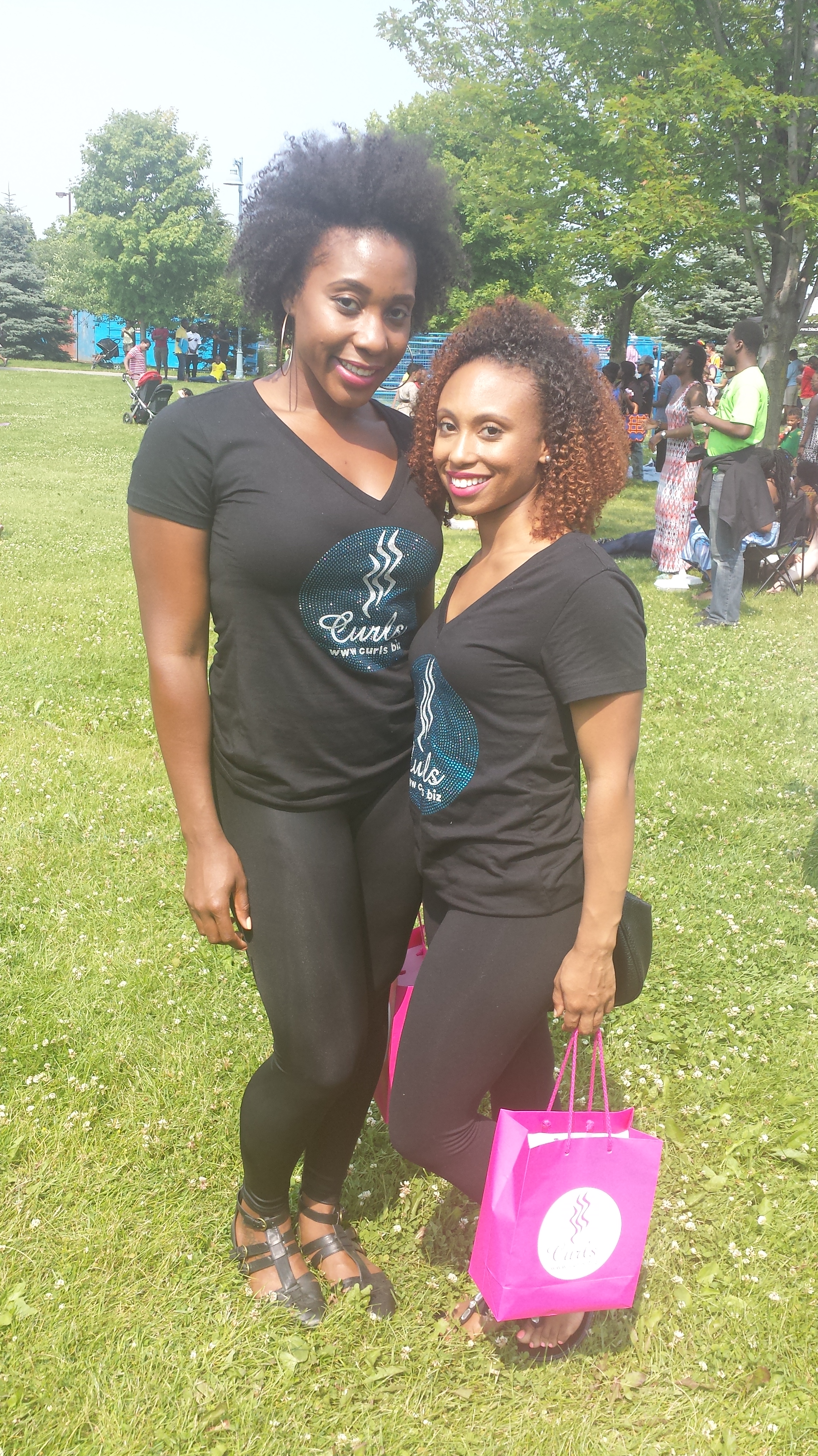
20150704_154305Then I had the privilege of running into YouTube sensation, Samantha Gomez of I’m Samantha Gomez (click here to check out her channel), and fitness, lifestyle and hair blogger, Alaina Gomez-Henry of Shorty with a Curl (click here to visit her blog), who were working the festival as representatives for CURLS™ Hair Products.
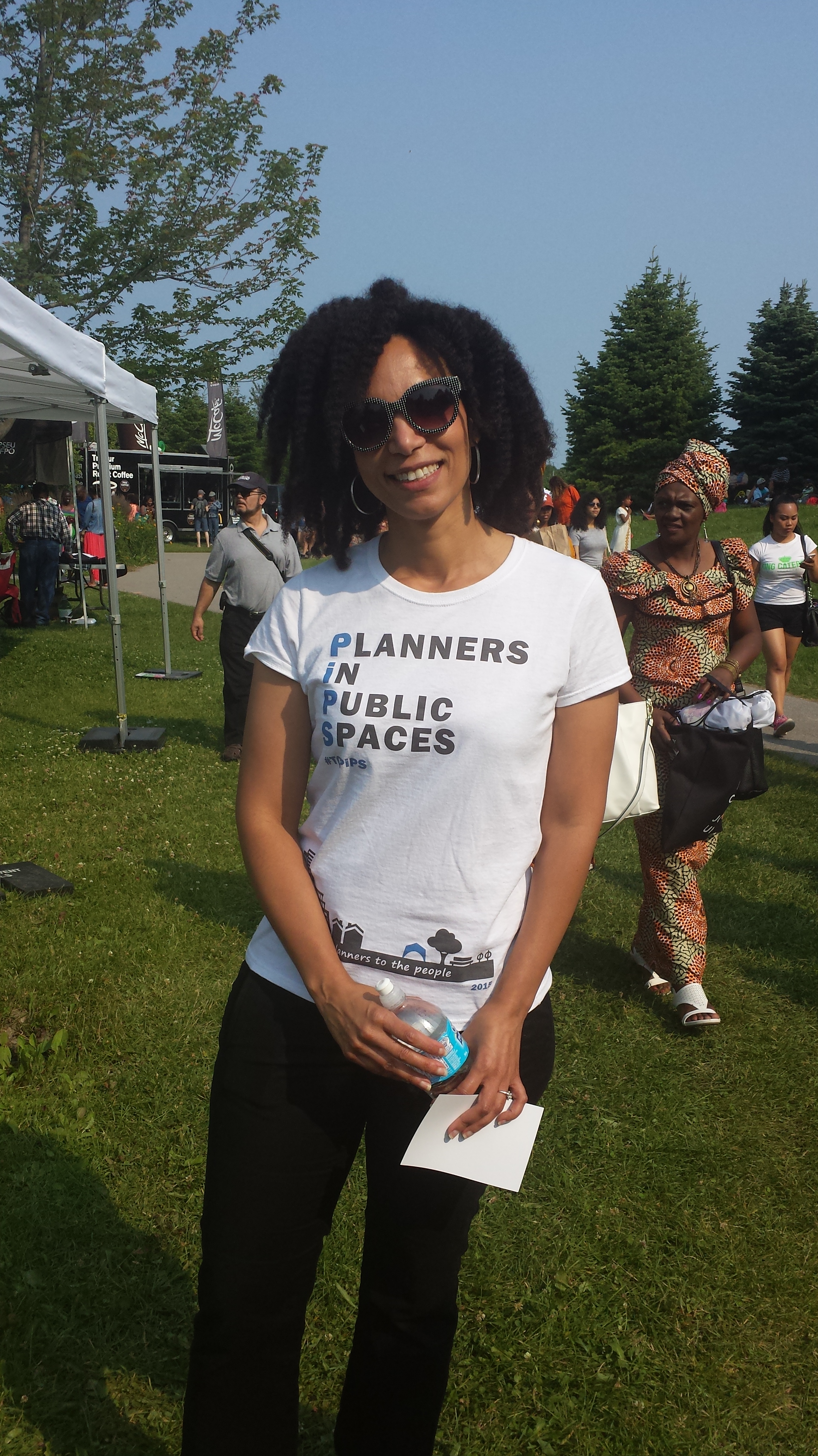
They both agreed that the Natural Hair Movement is here to stay.  “People are embracing it more and more,” stated Samantha.

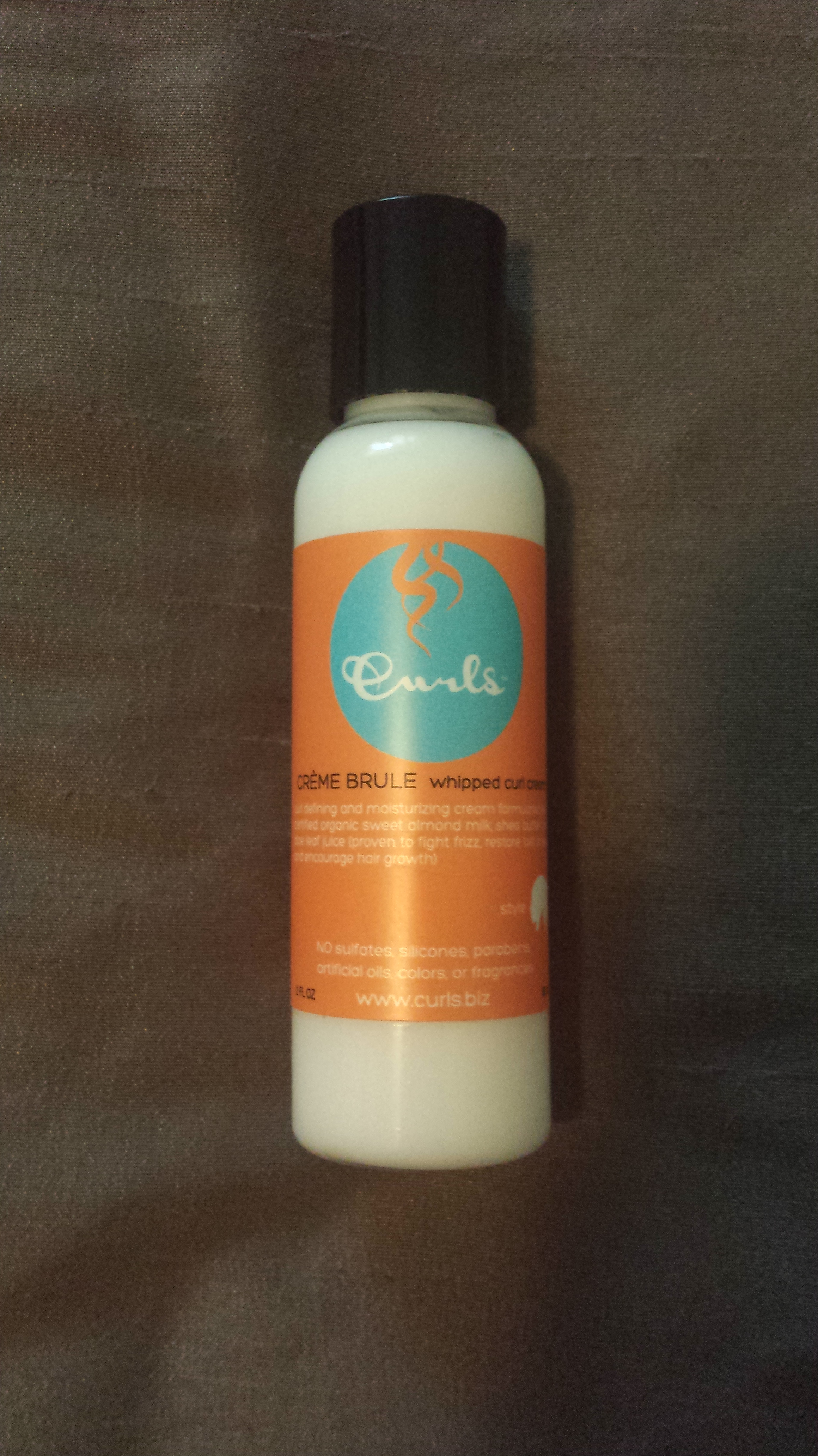
These beautiful curlistas were also kind enough to bless me with some samples of one of my favourite styling products, CURLS™ Crème Brule Whipped Curl Cream (love how it defines my curls!), which made my day!

Perfect travel size too!

Who doesn’t like crème brûlée?

20150704_163536Later, I met the lovely Shaniqua, wearing extension braids with grey highlights, at the Black Experience Project tent.  She was recruiting participants for the BEP Project, an important study about the “‘lived experience’ of individuals across the Greater Toronto Area who self-identify as Black or of African heritage” (if you’re interested in participating in the study, click here).

Shaniqua thinks that the Natural Hair Movement is here to stay, as “people are reconnecting with themselves and are embracing themselves.”  She shared that she decided to go natural about 4 years ago, when her hair had broken off from perming it.  The breaking point for her was when her stylist wanted $125 to perm just a couple of inches of hair…needless to say, she has been natural ever since!


20150704_170327

Then I chatted with Sipo, whose glorious twist-out I spotted at the City of Toronto tent.  Sipo believes that the Movement is here to stay:  “Once you go natural, and get used to it, you never go back!”

She shared that earlier on in her hair journey, she would go to Afrofest just to check out the hair—the festival offered a great opportunity to see what kinds of hairstyles other people were trying out!

And I agree with her—what better place to get a snapshot of what’s happening in Toronto’s Black hair scene than a gathering of brothers and sisters from across the African continent and the Diaspora?

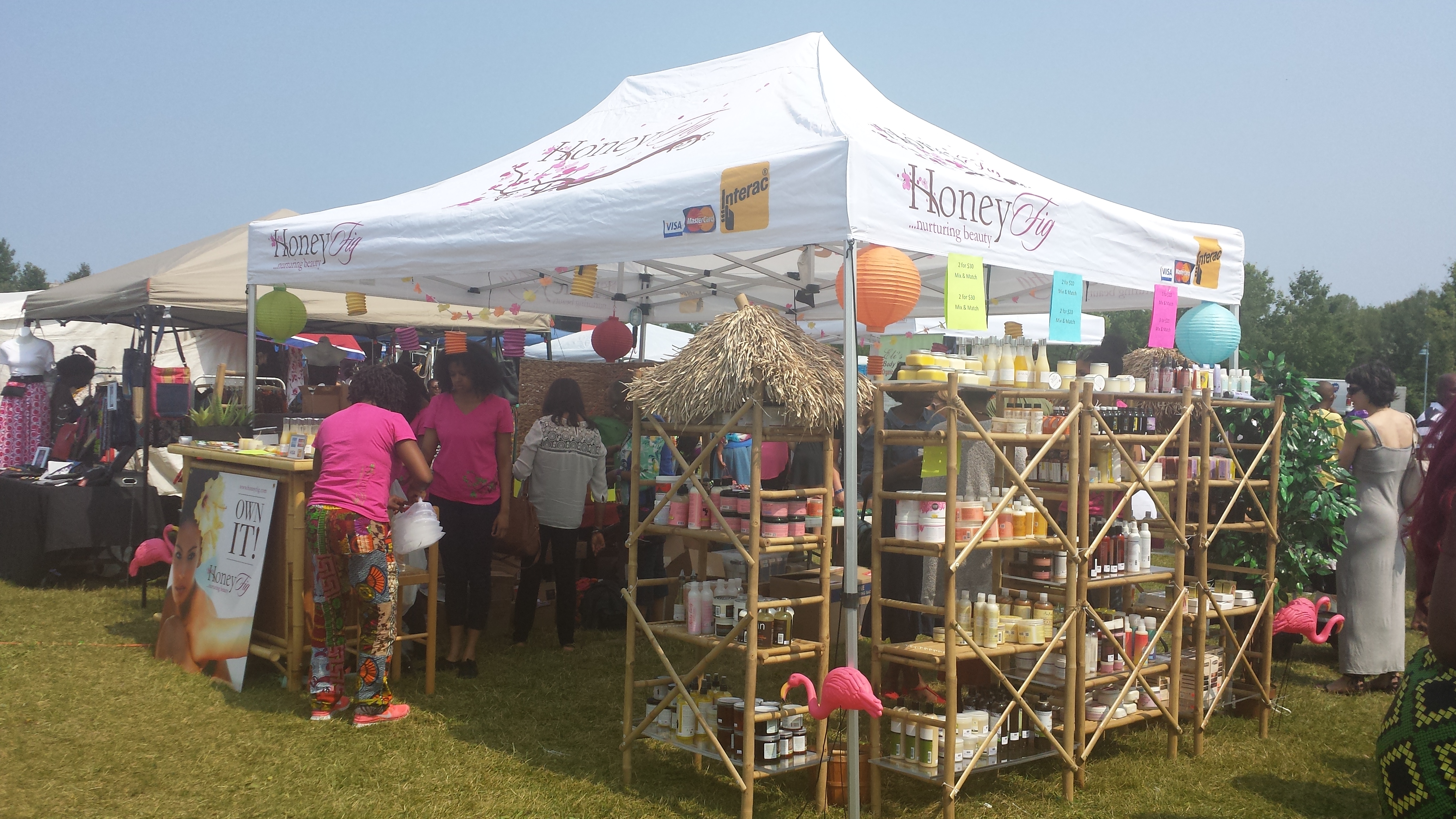
Honey Fig, the natural beauty supply store (www.honeyfig.com), also had a tent!

Honey Fig, the natural beauty supply store (www.honeyfig.com) had a tent too!

If my conversations with these naturalistas—along with my personal observations—were any indication, it looks like natural hair is not just a fleeting fashion trend, but rather is developing into a true movement of self-awareness and self-acceptance that is really taking root (pun intended) in the Greater Toronto Area.


Do you agree? Is the Natural Hair Movement here to stay, or is it just a trend?