How to Bantu-knot your hair

Bantu knots, also known as Zulu or Nubian knots, chiney bumps, pepper seeds, or hair nubbins, is a traditional African hairstyle, made by sectioning your hair into triangles, diamonds, or squares and coiling those sections into knots.

What you will need:

  • Sulfate-free shampoo and conditioner
  • 
Towel
  • Spray bottle
  • 
Wide-toothed comb/Detangling brush
  • 
Tail comb
  • Butterfly clips/Snag-free ponytail holders
  • Water-based moisturizer
  • Twisting gel/cream
  • Bobby pins (optional)

Steps:

  1. For best results, start with damp hair that has been recently shampooed and conditioned and towel-dried.
  2. Spritz hair with water using a spray bottle.
  3. Use your fingers or a tail comb to divide hair into about 6 to 9 sections, depending on the thickness of the hair.
  4. Separate the sections using butterfly clips or snag-free ponytail holders.
  5. Starting at the back of the head, loosen one section of hair (one on either edge of the nape is usually best).  If the section feels dry, spritz it with some water.
  6. Apply your favourite water-based moisturizer to the section, paying extra attention to the ends of the hair.
  7. Use your fingers/wide-toothed comb/detangling brush to detangle the section of hair.
  8. Apply your favourite twisting cream or gel to the section to the moisturized, detangled section.
  9. Separate with your fingers or part a piece of the section with your tail comb into your desired shape (starting from the edge of the nape makes it easier), keeping in mind that the bigger the piece the bigger the size of your Bantu knot, and clip the rest of the section to the side.
  10. Bend the strand close to its base and pinch the bump created between the thumb and pointer of your left hand, and use your right hand to wind the length of the strand around the bump at the base to form a coil.
  11. Keep winding the length of the strand around the coil with your right hand, gradually winding closer and closer to your head with each round, until all of the strand has been completely wound up, to form a Bantu knot.
  12. If your hair is curly, and your knot is coiled tightly enough, the ends will likely stay coiled under the knot; if your hair is looser, then you may need to use a bobby pin to hold the knot in place.
  13. Unclip the remainder of the section, and repeat Steps 9-12 until the section is completely knotted.
  14. Move on to the next section of hair, and repeat Steps 5-12 until all of the sections are knotted.

***You can also create Bantu knots from two-strand twists: once your two-strand twists are completed, follow steps 10-14 above.***

To keep your Bantu knots neat, wear a satin bonnet or tie your head with a satin/silk headscarf when you go to sleep.

Available Now: What Are You Gonna Do with that Hair?

Everyone knows Zuri as “the girl with the puffy hair.” Her afro is big and fluffy, and not even gravity can keep it down. People often ask her, “What are you gonna do with that hair?” Zuri finds the answer in her cultural hair-itage and shows she can sculpt and shape her curls and coils into beautiful works of African art—braids, ‘locks, bantu knots—in other words, whatever she wants!

This illustrated non-fiction book encourages Black girls to celebrate the beauty and versatility of their natural hair and learn the rich history of natural hairstyles.


Get your copy today!

Available in Canada on Amazon.ca: Click here to purchase.

Also available in-store at Knowledge Bookstore: 177 Queen Street West, Brampton, Ontario L6Y 1M5.

Available in the United States on Amazon.com: Click here to purchase.

Every day is a good hair day!


How to two-strand twist your hair

two-strand-twists-with-close-up-blog

Two-strand twists are one of the basic styling techniques for natural hair. They are similar to braids, only you intertwine two strands of hair instead of three.

What you will need:

  • Sulfate-free shampoo and conditioner
  • 
Towel
  • Spray bottle
  • 
Wide-toothed comb/Detangling brush
  • 
Tail comb
  • Butterfly clips/Snag-free ponytail holders
  • Water-based moisturizer
  • Twisting gel/cream

Steps:

  1. For best results, start with damp hair that has been recently shampooed and conditioned and towel-dried.
  2. Spritz hair with water using a spray bottle.
  3. Use your fingers or a tail comb to divide hair into about 6 to 9 sections, depending on the thickness of the hair.
  4. Separate the sections using butterfly clips or snag-free ponytail holders.
  5. Starting at the back of the head, loosen one section of hair (one on either edge of the nape is usually best).  If the section feels dry, spritz it with some water.
  6. Apply your favourite water-based moisturizer to the section, paying extra attention to the ends of the hair.
  7. Use your fingers/wide-toothed comb/detangling brush to detangle the section of hair.
  8. Apply your favourite twisting cream or gel to the section to the moisturized, detangled section.
  9. Separate a piece of the section (starting from the edge of the nape makes it easier), keeping in mind that the bigger the piece the bigger the size of your twist, and clip the rest of the section to the side.
  10. Split the subsection into two equal strands, pinching one strand in your right hand and pinching the other strand in your left hand.
  11. Twist the two strands together, overlapping the left strand over the right strand, left strand over the right strand, and continue overlapping the left strand over the right strand, down to the end of the twist.
  12. Apply some twisting gel or cream to the ends to keep the twist in place.
  13. Unclip the remainder of the section, and repeat Steps 9-12 until the section is completely twisted.
  14. Move on to the next section of hair, and repeat Steps 5-12 until all of the sections are twisted.

To keep your two-strand twists neat, wear a satin bonnet or use a satin/silk pillowcase when you go to sleep.


Coming soon…

Meet Zuri
Zuri loves her natural hair and all of the amazing things she can do with it!

Zuri -Coming Soon

Follow her throughout history and around the world as she learns about the beauty and versatility of natural hairstyles in What Are You Gonna Do with that Hair? 

Coming soon…

Why braiding matters

Braiding school in Senegal

Honing my braiding skills in Senegal

Ten years ago, I embarked on a journey to learn about the practice of hair braiding around the world. Why? Because, at the time, I noticed that even though hair braiding, in its various forms, was (and has always been) a universal styling technique in various cultures, people seemed to have a negative view of African stylized braiding; and I wanted to know why.

I’ve always loved braids, both wearing them and doing them.  To me, hair braiding is an artform, and I couldn’t understand why people have had a problem with it (and I still don’t know why).  So, I wanted to help people acknowledge the beauty and significance of hair braiding, not only to persons of African descent but to humans all around the globe; I really wanted people to recognize the value of hair braiding as a human practice.

Also, at the time I wrote my Watson project proposal, most of my girlfriends from college and many other Black women I knew had never been taught how to braid– and in many cases, they had no real desire or a need to learn- since, for the most part, they wore their hair straight. So, what this meant was that the practice of stylized braiding, a long-standing tradition in Black culture, was no longer being passed down from mothers to daughters.

Braiding O.N.'s hairThankfully, things were slowly starting to change: more and more women were beginning to return to their natural state.  As a result, braids (which, for a long time, had been reserved simply for the maintenance of little girls’ hair) began to be considered as an appropriate styling choice again.  Even so, many women were still not learning how to braid themselves, or teaching their daughters, for that matter.

Ten years later, that trend toward “going natural” has turned into a movement; and with the Natural Hair Movement now in full effect, I believe the art of braiding has become all the more important.

Spelman Naturalistas

10 years later, and we’re all natural!

Though I don’t expect for anyone to be as crazy about braids as I am, here are a few reasons why I think braiding matters (and why you should learn and also teach your children):

Braiding facilitates day-to-day maintenance and manageability

  • shrinkageBraiding can help stretch your hair if you’re experiencing shrinkage.
  • Braiding your hair into sections can make the washing, conditioning, and moisturizing processes easier, especially if your hair is thick.
  • When your hair is braided, it is easier to oil your scalp.
  • Once your hair is braided, you spend less time on a day-to-day basis doing your hair.
  • Being able to even just plait your hair before you go to bed at night can make a world of difference between having a manageable head of hair or having to spend time detangling your matted tresses the next day.
  • Braiding can be used to create heat-free crimps (also known as a braid-out).

Braids can help with the transitioning process

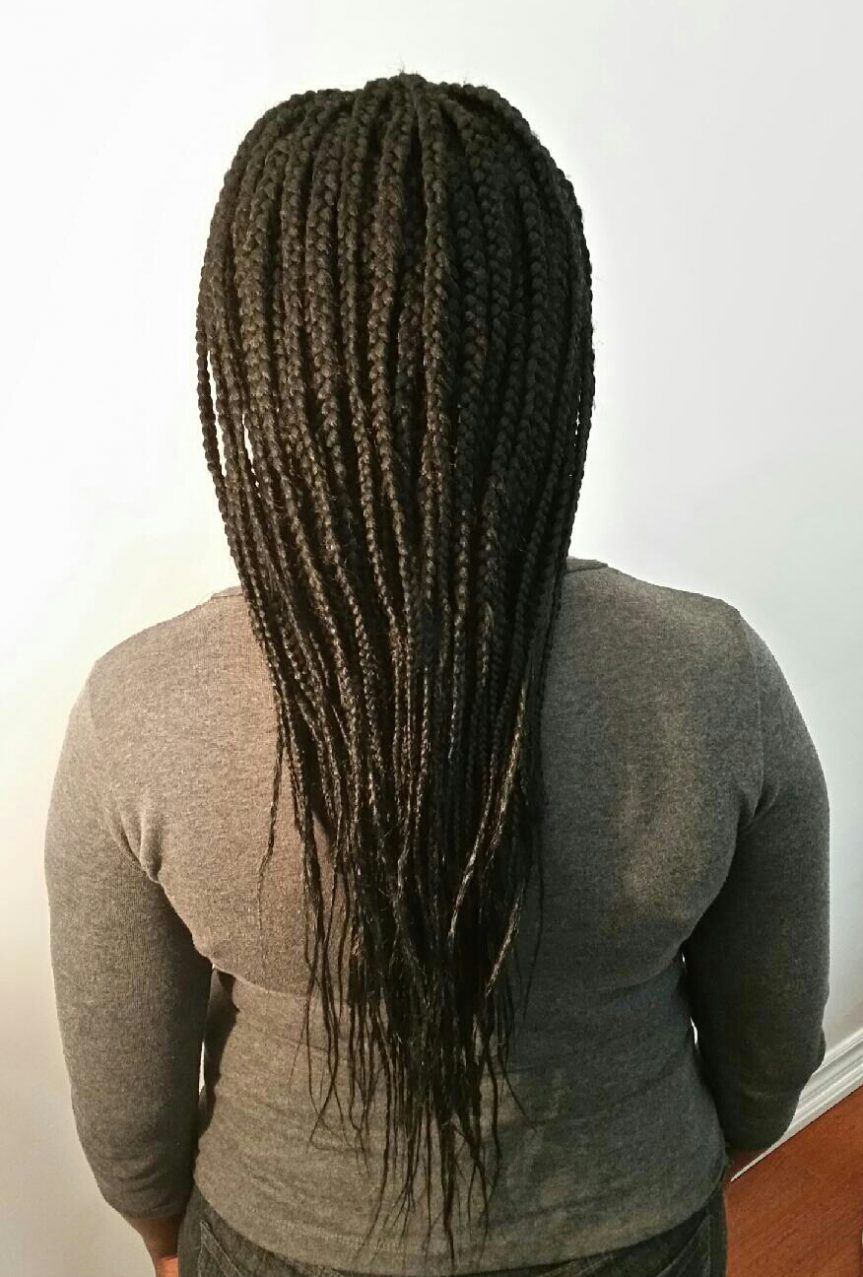
  • If you’re going natural, and are not ready to go the full nine yards yet by doing a big chop, wearing properly-installed extension braids can help during the process of growing out your hair (which can be a particularly frustrating time, in terms of styling, since your hair is two different textures at the same time).

Extension Braids (front)Extension braids (back)

Braids serve as great protective styles (provided they are done properly and are well taken care of)

  • Braids (which also serve as the basis of many protective styles, such as crochet braids and weaves) are great for protecting your mane from the wear-and-tear of constant manipulation; friction from your clothing, pillowcases, etc; and the elements.
  • Make sure you don’t braid your hair too tight, or leave your braids in for too long, otherwise you could do more damage than good to your hair and/or scalp. (Click the following link for Protective Styling Do’s and Don’ts tips from London Ivy ProductsProtective Styling ebooklet)

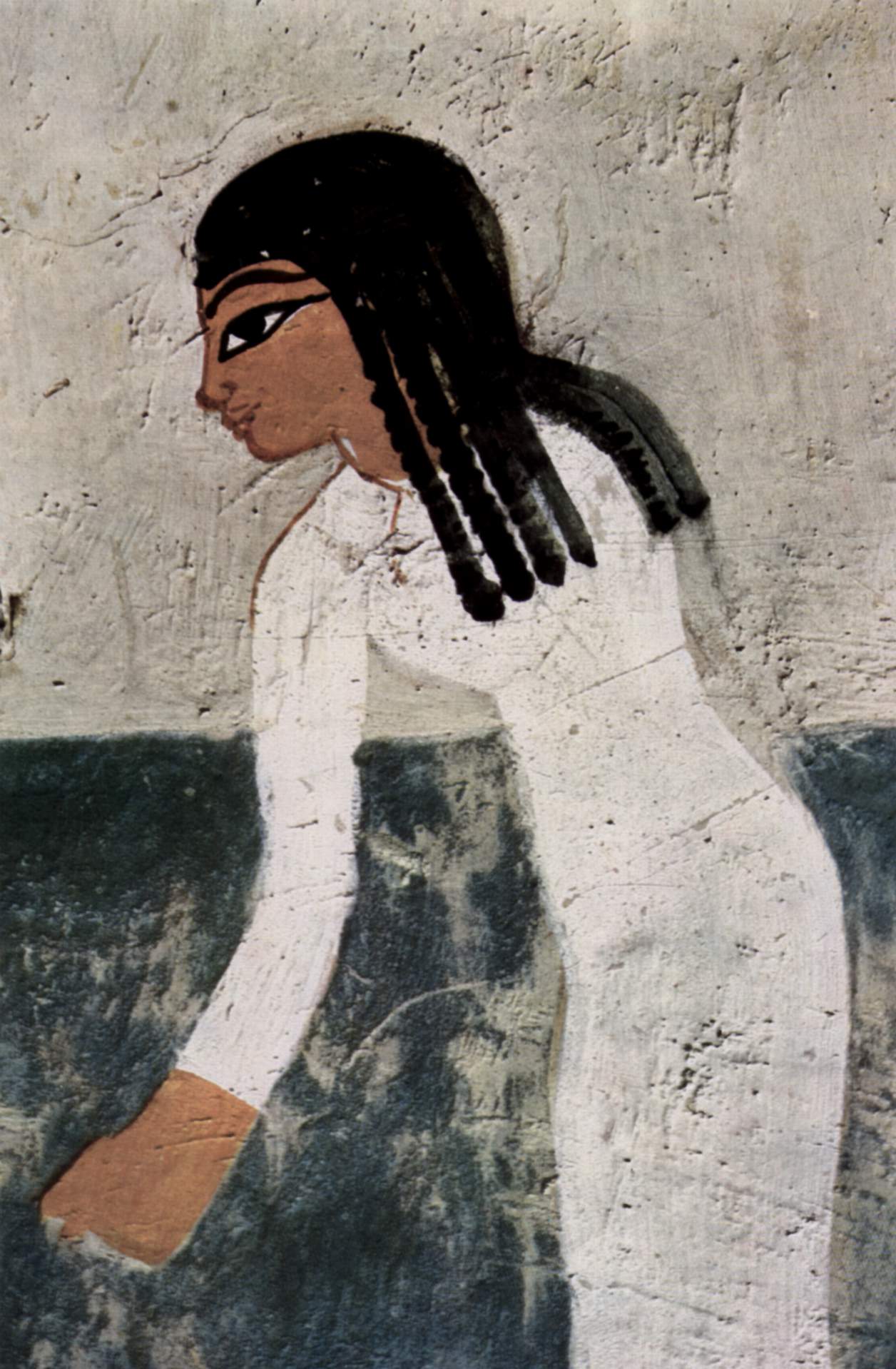
Ancient Egyptian braidsBraids connect us to and are a celebration of our African roots

  • Since the time of the Ancient Egyptians, braiding has been an important cultural and hair maintenance practice throughout the entire African continent.
  • Stylized braiding serves as a cultural souvenir of our African heritage, and is one of the main practices that survived the Middle Passage.
  • By learning how to braid and teaching your children how to braid, you would be carrying on a treasured ancient African tradition.

Braiding and bondingBraiding is bonding

  • Braiding creates bonds between the braider and the person whose hair is being braided- whether it be stylist/client, parent/child, between sisters or friends, etc- given the amount of time such styles may take and the conversations which take place.
  • The act of braiding is very intimate: when someone allows you to braid her hair, she is inviting you into her personal space and trusting that you will handle her hair with some TLC.
  • Braiding your own hair allows for deeper interaction and a better understanding of your tresses.

Braids are beautiful!

  • Braided styles are art: they are essentially hair sculptures!
  • Braiding highlights and displays the unique properties and beauty of textured hair; it’s a styling technique where your kinks and curls work to your advantage!
  • There’s nothing like a well-designed, neat braid-up to make you stand out from the crowd!

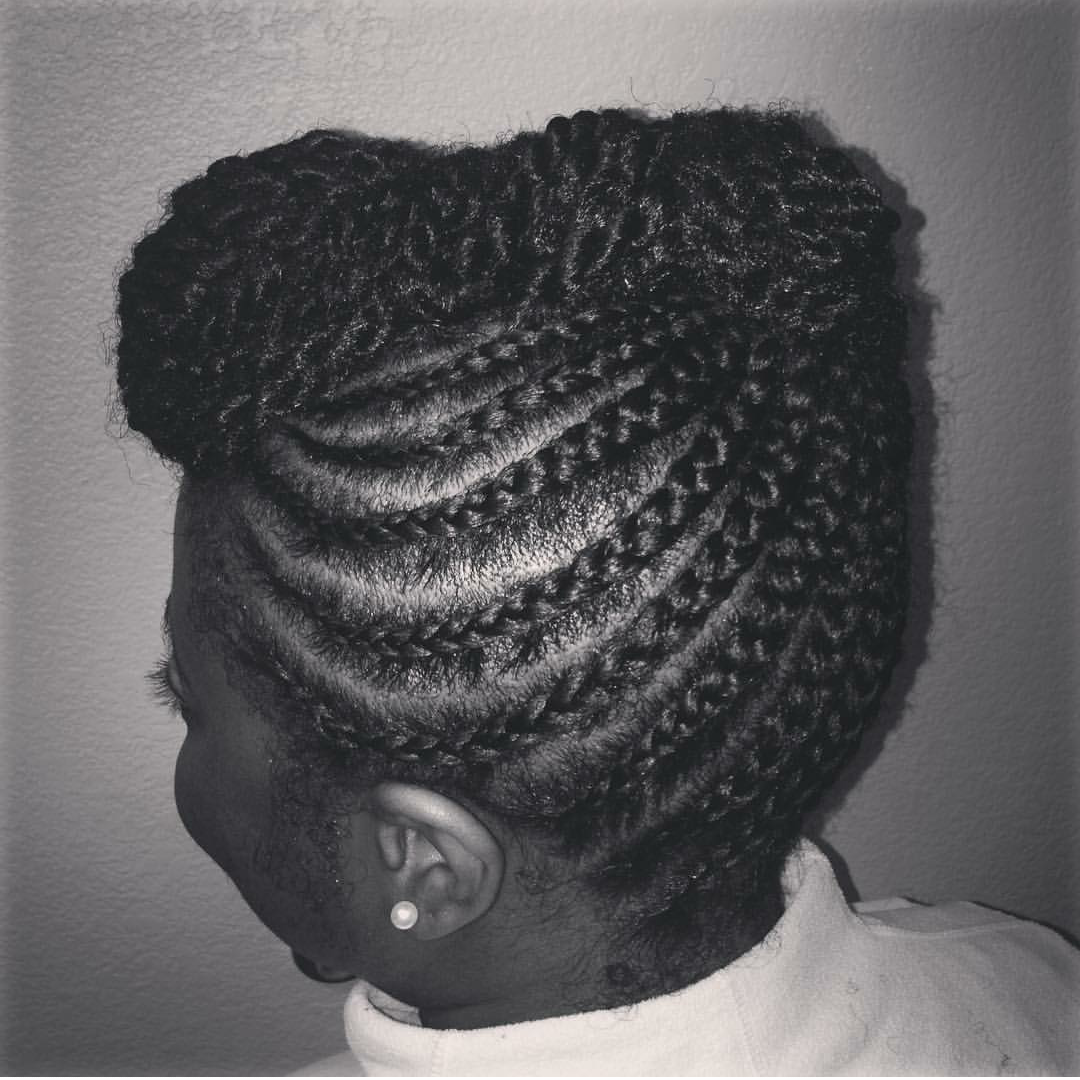
Natural Updo

Do you know how to braid? If not, would you like to learn?